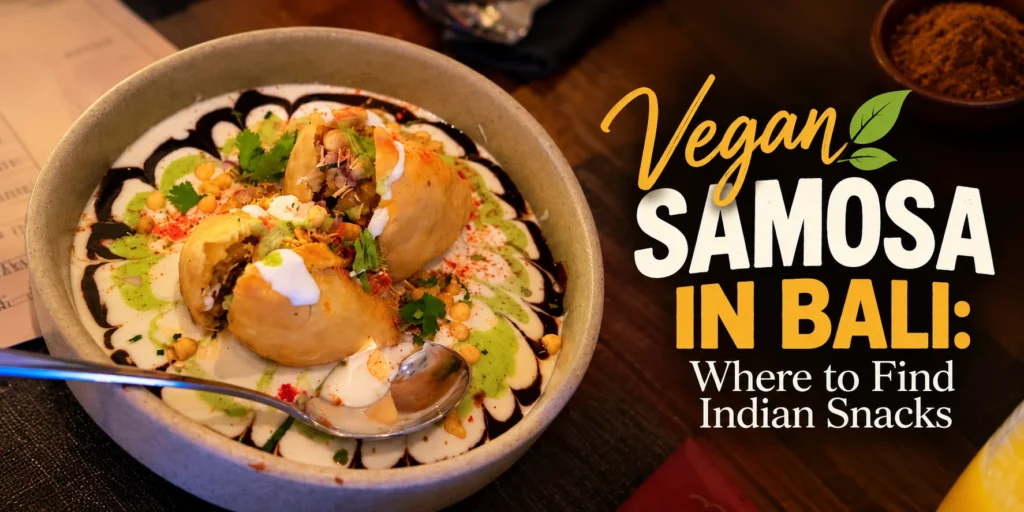
Samosas are a familiar Indian snack, but finding a version that fits a vegan diet requires more than checking whether the filling contains vegetables. The pastry, cooking fat and dipping sauce all matter. For travellers in Bali, asking a few specific questions before ordering can prevent confusion and make choosing food much easier.
If you are searching for vegan samosa Bali, start by checking current restaurant menus and confirming the ingredients directly with the staff. Potato and pea samosas are common, but recipes vary between kitchens. A vegetarian samosa may contain ghee or butter even when the filling is completely plant-based.
Bali has Indian restaurants and plant-based dining options in areas such as Canggu and Seminyak. Your choice will depend on where you are staying, which dishes are available and how clearly a restaurant can explain its ingredients.
This article explains how to check a samosa’s ingredients, which Indian snacks may be suitable for vegans, and how to find a convenient place to eat or order.
What Makes a Samosa Vegan?
A vegan samosa contains no ingredients derived from animals. A common version has a pastry shell filled with potatoes, green peas, onions, herbs and spices. The filling may be plant-based, but the pastry and cooking method must also meet the same requirement.
Some recipes use vegetable oil in the pastry, while others use ghee or butter. Milk powder and other dairy ingredients may also appear in prepared dough. This is why a vegetable filling alone is not enough to establish whether the complete snack is vegan.
Before ordering, check four things:
- Pastry: Does it contain butter, ghee, milk, milk powder or eggs?
- Filling: Are the potatoes, peas and seasonings free from dairy and other animal-derived ingredients?
- Cooking fat: Is the samosa fried in vegetable oil or another suitable plant-based fat?
- Sauce: Are the chutney and dips free from yoghurt, dairy and other unsuitable ingredients?
A restaurant should be able to explain the preparation method or tell you when it cannot confirm a particular ingredient. That information is more useful than a general vegetarian label.
Why Do Travellers Look for Vegan Indian Snacks in Bali?
Travellers often want food that is familiar, easy to share and suitable for their dietary preferences. Indian snacks can fit these needs because many recipes use potatoes, chickpeas, lentils, vegetables and spices. However, Indian cuisine includes both plant-based and dairy-rich dishes. Paneer, butter, cream, ghee and yoghurt are common in some preparations. A menu with several vegetarian choices may therefore offer only a smaller selection of vegan dishes. Searching for vegan Indian snacks Bali visitors can eat is a useful starting point, but the next step is to check the individual dishes.
- A Snack Between Activities: A samosa can be a convenient choice between sightseeing, shopping or other activities. Its size makes it suitable as a light bite, although serving sizes differ between restaurants. If you are ordering with friends, check how many pieces come with one serving. This helps you decide whether to order additional snacks or a larger meal.
- An Introduction to Indian Flavours: For someone trying Indian food for the first time, a potato-filled samosa can be an approachable introduction. Cumin, coriander, ginger and other spices give the filling its flavour. The heat level depends on the recipe. If you prefer mild food, ask whether the filling contains green chilli or other hot spices before ordering.
- Food for Sharing: Samosas are often served as starters. They can accompany other snacks, rice dishes or curries, making them a practical option for a group meal. When everyone has different dietary requirements, order only after checking which dishes are suitable. A vegan guest may need a different dip, while someone with an allergy may require additional information about preparation and shared equipment.
Where Can You Look for Vegan Samosa in Bali?
The most reliable way to find a suitable samosa is to compare current menus and contact the restaurant directly. Search results, old menu photographs and general descriptions may not reflect today’s ingredients or availability.
- Indian Restaurants: Indian restaurants are a natural starting point because their menus may include samosas, pakoras, lentil dishes, vegetable curries and other traditional snacks. Do not assume that every vegetarian item is vegan. A samosa might contain ghee, while a chutney or curry may contain yoghurt or cream. Ask about the specific dish rather than relying on the restaurant’s overall vegetarian selection. When looking for an Indian restaurant serving vegan samosa in Bali, check whether the restaurant identifies the dish as vegan and whether staff can confirm its preparation.
- Plant-Based Restaurants: Plant-based restaurants may offer dishes prepared without meat, dairy or eggs. Some serve Indian-inspired snacks, although the selection varies by venue. Check the current menu before travelling. A restaurant may offer vegan meals without serving samosas, and a dish listed on an older menu may no longer be available.
How to Check a Restaurant Before Visiting
Use this short checklist:
- Open the restaurant’s current menu or official website.
- Check whether the samosa is listed and labelled vegan.
- Ask about the pastry, filling, cooking fat and chutney.
- Confirm that the dish is available on your planned visit.
- Check the address, opening hours and ordering options.
These steps help you avoid travelling to a restaurant for a dish that is unavailable or unsuitable.
Finding Vegan Samosa in Canggu
Canggu has a varied dining scene, so visitors can compare Indian restaurants, cafés and plant-based eateries before choosing where to eat. For vegan samosa Canggu searches, focus on restaurants with clear menu information. A venue that labels its food vegetarian may still use ghee or butter, so ask for confirmation before placing an order.
If you are staying in Canggu or nearby Berawa, consider these questions:
- Is the samosa available today?
- Is the pastry made without dairy or eggs?
- Is the filling completely plant-based?
- Which oil is used for frying?
- Can the restaurant provide a vegan chutney?
- Is takeaway available if you do not plan to dine in?
A clear answer to these questions helps you make a more informed decision. If the staff cannot confirm the recipe, ask about another dish whose ingredients they can verify.
Finding Vegan Samosa in Berawa
Berawa is part of the wider Canggu area and is another location where visitors can search for nearby dining options. If you are staying in the neighbourhood, checking the menu before leaving your accommodation can save time.
For vegan samosa Berawa searches, prioritise current information over broad claims about a restaurant’s menu. Look for the dish, confirm the ingredients and check whether the venue is convenient for your plans. If a restaurant offers online ordering, confirm the exact item and any dietary requirements before completing your purchase. You can also ask whether the accompanying chutney is included or needs to be ordered separately.
Can You Find Vegan Samosa in Seminyak?
Seminyak has Indian restaurants and venues serving a range of international cuisines. Travellers looking for a snack can compare menus and contact restaurants to ask about plant-based choices. When searching for vegan samosa Seminyak, apply the same ingredient checks used elsewhere in Bali. A restaurant may have vegetarian starters without offering a vegan samosa.
If a samosa is unavailable, ask about other suitable dishes. For visitors searching for vegan Indian food Seminyak, looking at the complete menu may reveal more options than searching for one snack alone. Before travelling, check the current address and opening hours. If you have a particular dietary requirement, contact the restaurant before setting out rather than waiting until you arrive.
What Other Indian Snacks May Be Suitable for Vegans?
Samosas are not the only Indian snack worth considering. Depending on the recipe, several other dishes may fit a vegan diet. Their ingredients and preparation methods still need to be checked.
| Indian snack | Common ingredients | What to confirm |
| Vegetable pakora | Vegetables, gram flour and spices | Batter ingredients and frying oil |
| Onion bhaji | Onion, gram flour and seasonings | Whether dairy or eggs are added |
| Aloo tikki | Potato, herbs and spices | Butter, dairy and binding ingredients |
| Chana chaat | Chickpeas, vegetables and chutney | Yoghurt and sauce ingredients |
| Plain dosa | Fermented rice and lentil batter | Whether ghee or butter is used |
| Vegetable curry | Vegetables, spices and sauce | Cream, butter, yoghurt or ghee |
| Dal | Lentils, spices and aromatics | The fat used for tempering |
These are common preparations, not guarantees about a particular restaurant’s recipe.
- Vegetable Pakora: Pakoras are usually made by coating vegetables in gram flour batter and frying them. Onion, potato and other vegetables may be used. Ask whether the batter contains dairy or eggs and which oil is used. Check the accompanying dip as well.
- Aloo Tikki: Aloo tikki is a potato-based snack that may contain herbs, spices and other vegetables. Some recipes use butter or other ingredients that are not suitable for vegans. Ask how the tikki is prepared and whether the restaurant can confirm its ingredients.
- Chana Chaat: Chana chaat combines chickpeas with ingredients such as onion, tomato, herbs, spices and chutneys. It can be a useful option for someone who wants a savoury snack without pastry. Some versions include yoghurt. Request a dairy-free preparation and confirm that the restaurant can provide it.
- Plain or Vegetable Dosa: Dosa is commonly made from fermented rice and lentil batter. The batter itself may be plant-based, but a restaurant may use ghee or butter on the cooking surface. Ask for preparation with vegetable oil if appropriate, and check the filling, chutney and sambar separately.
How to Order Vegan Samosa in Bali
If you want to order vegan samosa Bali restaurants may offer, the simplest approach is to check the ingredients and availability before paying.
- Check the Current Menu: Look for a vegan label or an ingredient description. If the item is marked vegetarian, ask whether it contains dairy or eggs.
- Ask About the Pastry: The pastry is easy to overlook. Ask whether the recipe includes butter, ghee, milk, milk powder or eggs.
- Confirm the Filling and Cooking Fat: Check whether the filling contains only plant-based ingredients and whether the samosa is fried in suitable oil. If you are concerned about shared equipment, ask whether the kitchen uses the same fryer for other foods. This is particularly relevant if you have a food allergy or a strict preparation preference.
- Check the Chutney: Ask whether the dip is vegan. If the standard sauce contains yoghurt, request an alternative only if the restaurant can provide one.
- Confirm Availability and Price: Menus, prices and stock can change. Check the current menu or contact the restaurant before ordering. If you are buying snacks for a group, confirm the serving size as well. This gives the restaurant enough detail to answer your question clearly.
What Should You Check When Buying Vegan Samosa?
If your goal is to buy vegan samosa Bali restaurants offer for takeaway, do not focus on price alone. The serving size, ingredients and preparation method are equally important.
Before placing an order, check:
- Ingredients: Are the pastry and filling fully plant-based?
- Portion size: How many samosas are included?
- Sauces: Are vegan chutneys included?
- Preparation: Can the restaurant explain its cooking method?
- Availability: Is the dish currently being prepared?
- Collection or delivery: What options does the restaurant currently provide?
For larger orders, contact the restaurant in advance. This gives staff a chance to confirm stock and clarify any special dietary requirements.
Vegan Samosa at Chai’Ba: What Should You Know?
Chai’Ba serves Indian food at its Canggu and Seminyak locations. Its published menu lists Indian Samosa as a vegetarian dish, but that listing does not explicitly establish that the standard samosa is vegan. If you want to eat there, check the current menu and ask the staff whether a vegan version is available. Confirm the pastry, filling, cooking fat and chutney before ordering.
If the samosa cannot be confirmed as vegan, ask about other suitable items from the menu. The Canggu location has a plant-based menu, but each dish should still be checked against your dietary needs. You can start with the official menu and contact the restaurant for current ingredient and availability information.
Common Mistakes When Choosing Vegan Indian Snacks
A few common assumptions can lead to the wrong choice.
- Assuming vegetable means vegan: Vegetables may be wrapped in pastry made with ghee or butter.
- Checking only the filling: The pastry, cooking fat and chutney also matter.
- Relying on old menu information: Ingredients and availability can change, so check the current menu.
- Confusing vegan with allergy-safe: Vegan food may still contain wheat, nuts, soy or other allergens.
- Assuming every branch has the same menu: Different locations may have different selections or preparation arrangements.
- Waiting until arrival to ask: Contacting the restaurant in advance can help you make a decision before travelling.
Final Thoughts
Finding vegan samosa Bali options starts with checking the complete recipe, not just the filling. A potato-and-pea samosa may look plant-based, but the pastry, cooking fat and sauce can affect whether it suits a vegan diet. Travellers in Canggu, Berawa and Seminyak can check current menus and contact restaurants to confirm the ingredients before visiting. At Chai’ba Bali, guests can ask about available Indian snacks and their preparation to find an option that matches their dietary preferences. If a samosa cannot be confirmed as vegan, another clearly identified plant-based snack may be a better choice. Asking a few simple questions before ordering can help you enjoy Indian food in Bali with greater confidence.
FAQ’s
Start with current menus at Indian restaurants and plant-based eateries. Check whether the samosa is labelled vegan and ask about its pastry, filling, cooking fat and chutney. If the restaurant cannot confirm the ingredients, consider another dish with a preparation method it can explain clearly.
No. A vegetable samosa may contain potatoes, peas and spices while the pastry includes butter, ghee or milk. Some chutneys also contain yoghurt. Ask the restaurant about the entire dish rather than relying on its name or a vegetarian label.
Check current menus at restaurants in Canggu and nearby Berawa, then contact the venue to confirm the ingredients and availability. Online search results can help you identify potential options, but they do not guarantee that a particular samosa is vegan or available on your chosen date.
You can check Indian restaurants and plant-based eateries in Seminyak for samosas and other snacks. Confirm the pastry, filling and cooking method directly with the restaurant. If the samosa is unavailable or its ingredients cannot be verified, ask about another suitable plant-based dish.
A common version contains potatoes, green peas, onions, herbs and Indian spices inside a pastry shell. Recipes vary between kitchens. To confirm that a samosa is vegan, check that the pastry, filling and cooking fat contain no animal-derived ingredients
Tamarind and green coriander chutneys can be vegan when prepared with plant-based ingredients. Recipes differ, and some dips contain yoghurt or dairy. Ask the restaurant about the particular chutney served with the samosa rather than assuming every version is suitable.
Some restaurants provide takeaway or delivery, depending on their current services and delivery areas. Check the official menu or ordering platform, confirm that the samosa is vegan, and review the portion size and charges before completing your order.
Vegetable pakora, onion bhaji, aloo tikki, chana chaat and plain dosa may be suitable, depending on their recipes. Ask about batter, cooking fat, fillings and sauces. These dishes are not automatically vegan, so confirm the ingredients before ordering.
Not necessarily. Vegan food excludes animal-derived ingredients but may contain wheat, nuts, soy or other allergens. Tell the restaurant about your allergy and ask about ingredients and kitchen practices. If the staff cannot provide reliable information, choose an alternative you can assess safely.
Ask whether the pastry contains butter, ghee, milk or eggs, whether the filling includes animal-derived ingredients, and which fat is used for frying. Check the chutney separately. If staff cannot verify these details, do not assume the samosa is vegan.
🐦 Kicau Mania
Nikmati suara burung terbaik setiap hari! Rawat, latih, dan cintai burung kicauanmu.